Seasonal Focus Themes
Align your focus practice with nature's rhythms through beautiful seasonal themes that evolve throughout the year.
Complete Guide to Seasonal Focus Themes
The Science of Seasonal Awareness
Chronobiology research reveals that humans possess internal seasonal rhythms affecting mood, energy, and cognition. These rhythms evolved when our ancestors lived outdoors with constant seasonal exposure. Modern indoor life disrupts these cycles, contributing to seasonal affective disorder and general psychological malaise. While digital themes cannot fully replace natural seasonal exposure, they provide visual cues that maintain some seasonal awareness. Studies show that even images of nature trigger biophilic responses—viewing spring blossoms or autumn leaves activates pleasure centers and reduces stress hormones. Seasonal themes leverage this response throughout your workday.
Japanese Seasonal Aesthetics
Japan developed perhaps the world's most refined tradition of seasonal appreciation. The concepts of shiki (four seasons) and mono no aware (pathos of things) emphasize finding beauty in seasonal change and impermanence. Japanese culture evolved distinct aesthetics for each season: spring emphasizes delicate beauty and new beginnings through cherry blossoms and young greenery; summer celebrates lush abundance through verdant gardens and flowing water; autumn prizes brilliant color and melancholic beauty through maple leaves and harvest imagery; winter appreciates stark simplicity and quiet through snow scenes and bare branches. Bento's seasonal themes draw on this rich aesthetic tradition.
Psychological Benefits by Season
Each season offers distinct psychological benefits when embraced through environmental design. Spring themes activate approach motivation—the psychological drive toward new goals and experiences. The visual metaphors of blossoming and growth prime the mind for initiative and optimism. Summer themes support sustained effort through images of abundance and vital energy. Autumn themes facilitate reflective cognition and completion orientation through harvest and transition imagery. Winter themes promote contemplative thinking and rest through scenes of stillness and quietude. Understanding these benefits helps you select themes strategically.
Customizing Seasonal Rotations
While quarterly seasonal changes are natural, you can customize rotation schedules to match your needs. Some prefer micro-seasons—changing themes eight or twelve times yearly for more frequent visual renewal. Others maintain seasonal themes for full three-month quarters. You might change themes at solstices and equinoxes for astronomical precision, or at traditional cultural markers like first bloom or first frost. Consider your local climate—if winter is long, you might subdivide it into early and late winter themes to prevent monotony. Your seasonal practice should feel organic to your circumstances.
Pairing Seasons with Focus Techniques
Seasonal themes enhance various focus methodologies. The Pomodoro Technique feels different in each season—spring energy for quick sprints, winter contemplation for thoughtful intervals. Time-blocking gains seasonal character when morning blocks use different seasonal themes than afternoon blocks. Deep work sessions in autumn themes support the sustained reflection this methodology emphasizes. Seasonal awareness can inform your annual planning—scheduling intensive creative sprints in summer, reflective reviews in autumn, strategic planning in winter, and new initiative launches in spring.
Featured Themes
Each theme is carefully crafted to create the perfect atmosphere for your focus sessions.

Spring Blossoms
Fresh & Hopeful
Summer Garden
Vibrant & Alive
Autumn Maple
Warm & Reflective
Winter Snow
Quiet & Still
More Than Just Backgrounds
Humans evolved in close connection with seasonal cycles, and our biology still responds to these natural rhythms. Yet modern indoor work often disconnects us from the passing seasons entirely. Seasonal focus themes bridge this gap, bringing the visual qualities of spring, summer, autumn, and winter into your workspace. This connection to natural cycles can enhance well-being, provide variety that maintains engagement, and create meaningful markers as time passes. Research in chronobiology confirms that maintaining awareness of natural cycles supports mental health and cognitive performance—even when that awareness comes through visual cues rather than direct outdoor exposure. Bento's seasonal Japanese-inspired themes capture the distinct beauty of each season through the refined aesthetic lens of traditional Japanese appreciation for nature's changes. Each seasonal collection reflects centuries of cultural attention to the unique qualities of spring, summer, autumn, and winter.
Natural Rhythm Connection
Seasonal themes maintain your connection to natural cycles even during indoor work, supporting circadian health and well-being. Our bodies evolved to respond to seasonal changes in light quality, color temperature, and natural imagery. When work keeps you indoors, seasonal digital environments provide some of the environmental variation your biology expects, preventing the psychological flatness of seasonless existence.
Variety Without Chaos
Changing themes seasonally provides visual freshness and novelty while maintaining the calm, consistent feel that supports focus. Unlike random theme switching that fragments attention, seasonal rotation follows a natural logic that feels coherent. You get the cognitive benefits of occasional environmental change without the disruption of arbitrary novelty. Each season brings anticipated visual renewal.
Emotional Resonance
Each season carries deep emotional associations developed over a lifetime of experience. Spring themes inspire renewal, fresh starts, and energetic beginnings. Summer evokes abundance and vital energy. Autumn supports reflection, harvest of efforts, and preparing for completion. Winter invites contemplation and rest. Aligning your work environment with these associations allows seasonal energy to support your tasks.
Time Awareness
Seasonal changes mark the passage of time meaningfully, helping you stay aware of progress through the year. When work days blur together in identical environments, time loses texture. Seasonal themes restore natural time-marking, helping you perceive progress and stay oriented within the year. This awareness supports long-term goal tracking and prevents the disorienting timelessness of unchanging digital spaces.
How It Works
Transform your focus sessions in three simple steps.
Select Your Season
Choose a theme that matches the current season or the energy you want to cultivate in your work. Consider whether you want environmental harmony with the world outside or deliberate contrast to shift your energy.
Immerse in the Atmosphere
Let the seasonal theme create an ambient backdrop for your focus sessions. Subtle animations capture each season's character—falling petals, drifting leaves, gentle snowfall. Allow the seasonal quality to infuse your work experience.
Rotate Throughout the Year
Update your theme as seasons change. This creates anticipation and keeps your focus environment fresh. Mark the transitions consciously—seasonal theme changes can become personal rituals marking the year's progress.
Get the Most from Your Themes
Expert tips to maximize your focus environment.
Spring: Fresh Starts
Use cherry blossom and new growth themes when starting new projects or learning new skills. Spring energy supports beginnings. The visual metaphor of blossoming potential can boost motivation for launching initiatives and exploring new directions.
Summer: Peak Productivity
Vibrant garden themes match the long-day energy of summer. Use this season for intensive work sprints and ambitious goals. Summer themes support sustained effort and abundant output, mirroring nature's most productive season.
Autumn: Deep Work
Golden leaves and harvest themes support reflective, deep work. Autumn is ideal for completing projects and consolidating learning. The visual metaphor of harvest encourages gathering the fruits of your efforts and preparing work for completion.
Winter: Rest and Planning
Tranquil snow scenes encourage slower, more contemplative work. Use winter for planning, reviewing, and strategic thinking. Winter themes support the incubation phase of creativity where ideas develop beneath the surface.
Match Project Phases to Seasons
Align project phases with seasonal energies when possible: initiate in spring, execute intensively in summer, refine and complete in autumn, reflect and plan in winter. This alignment creates natural rhythm in long-term work.
Use Counter-Seasonal Themes Intentionally
Sometimes you need energy different from the current season—spring freshness during winter stagnation or autumn calm during hectic summer. Using counter-seasonal themes intentionally can shift your energy when circumstances require it.
Mistakes to Avoid
Learn from others' experiences and sidestep these common errors.
Ignoring seasonal themes entirely and using the same environment year-round
Commit to at least quarterly theme changes aligned with seasons. Even if you prefer certain aesthetics, seasonal rotation provides cognitive benefits of variety while maintaining coherent progression. Set calendar reminders for seasonal transitions.
Changing themes too frequently and losing seasonal coherence
While variety within seasons is fine, maintain seasonal consistency for at least a few weeks per theme. Constant switching undermines the learned association between environment and season that makes seasonal themes psychologically effective.
Using seasonal themes that conflict with your actual energy needs
While generally aligning with natural seasons works well, prioritize your actual needs. If winter already feels depleting, counter-seasonal spring themes might help more than leaning into winter darkness. Use seasonal themes as tools, not rigid rules.
Failing to extend seasonal awareness to physical environment
Complement digital seasonal themes with small physical touches: a small seasonal plant, appropriate lighting warmth, or seasonal scents. This multi-sensory seasonal presence deepens the psychological benefits beyond visual themes alone.
Treating seasonal changes as purely aesthetic rather than psychological
Approach seasonal theme transitions intentionally. Take a moment when changing seasons to reflect on the previous period and set intentions for the new one. This conscious engagement transforms decoration into meaningful practice.
Real-World Examples
See how others apply these principles in practice.
Product Manager Annual Planning Rhythm
A product manager aligns their annual planning cycle with seasonal themes. Spring cherry blossom themes accompany Q1 initiative launches and roadmap planning. Summer garden themes support intensive Q2 execution sprints. Autumn harvest themes facilitate Q3 retrospectives and metric reviews. Winter snow scenes create contemplative space for Q4 strategic planning. This alignment has created natural rhythm in their work year, with seasonal transitions providing psychological closure on each phase and fresh energy for the next.
Freelance Writer Seasonal Creativity
A freelance writer discovered that different seasonal themes support different types of writing. Spring themes energize pitching new story ideas and beginning fresh projects. Summer abundance themes fuel high-volume content production. Autumn themes provide the reflective quality needed for personal essays and deeper pieces. Winter themes support the contemplative work of book proposal development. Matching writing type to seasonal theme has increased both productivity and creative satisfaction.
Remote Team Seasonal Cohesion
A distributed team adopted synchronized seasonal themes to create shared temporal experience despite geographic separation. Team members across hemispheres use the same seasonal theme based on company headquarters location, creating visual unity during video calls and shared focus sessions. Seasonal theme transitions have become team rituals—brief celebrations that mark time passing and acknowledge collective progress through the year.
Student Academic Year Alignment
A graduate student aligns seasonal themes with the academic calendar. September autumn themes support fall semester intensity and serious study. December winter themes match holiday break reflection and planning. January continues winter themes for spring semester strategic start. Spring themes accompany thesis push energy and year-end completion. Summer themes support research intensives and independent projects. This alignment has helped maintain motivation through the demanding multi-year graduate program.
Common Questions
Everything you need to know about Bento themes.
Should I use the current season's theme or choose based on mood?
Both approaches work well. Using current season themes maintains connection to natural rhythms, while choosing based on the energy you need can support specific work modes. A hybrid approach often works best: generally follow natural seasons but use counter-seasonal themes when you need different energy. For example, use spring themes during winter if you need activation energy, or autumn themes during hectic summer if you need calming influence.
What seasonal themes does Bento offer?
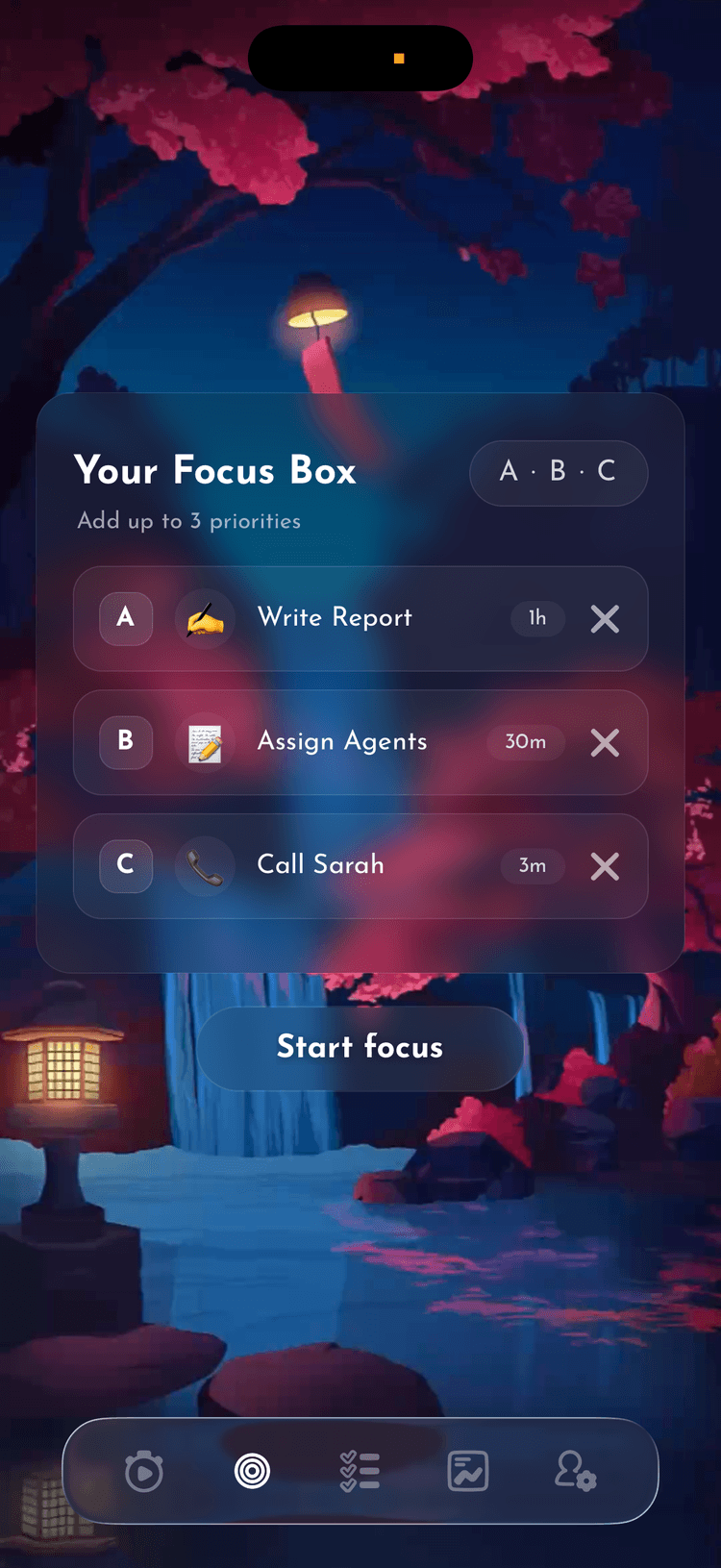
Bento features Japanese-inspired themes for all four seasons: spring cherry blossoms and fresh gardens with soft pinks and new greens; summer lush greenery and vibrant life with deep greens and bright accents; autumn maple leaves and golden light with warm reds, oranges, and yellows; winter snow scenes and bare branches with whites, grays, and muted tones. Each captures the distinct mood of its season through the refined aesthetic of Japanese natural appreciation.
How do seasonal themes differ from static wallpapers?
Bento's seasonal themes are live and animated, with subtle movement that brings scenes to life—falling petals in spring, drifting leaves in autumn, gentle snowfall in winter. This creates an immersive atmosphere static images cannot achieve. The movement operates at natural pace: slow enough to avoid distraction while present enough to create living environment feeling. Static wallpapers flatten into background; animated themes maintain subtle presence.
Can I use seasonal themes year-round regardless of actual season?
Absolutely. If autumn themes help you focus best, use them in any season. Some people prefer certain seasonal aesthetics regardless of the calendar, and that is perfectly valid for personal productivity. You might discover that your optimal focus aesthetic does not match your current season. The goal is effective focus, not calendrical correctness. Use what works for you.
How do different hemispheres handle seasonal themes?
If you live in the Southern Hemisphere, you have two approaches: follow Northern Hemisphere seasons for cultural alignment with most content and media, or reverse the calendar to match your local seasons. Neither is wrong—choose based on whether local seasonal reality or global cultural synchronization matters more to your experience. Many Southern Hemisphere users appreciate Northern seasonal themes as contrast to their actual weather.
What if I live somewhere without distinct seasons?
Even in climates without dramatic seasonal change, seasonal themes provide beneficial variety and connection to broader natural rhythms. You might mark seasons culturally rather than meteorologically, or use seasonal themes as purely aesthetic variety without trying to match external reality. The psychological benefits of seasonal rotation remain even without corresponding weather changes.
How should I handle seasonal transitions—gradually or suddenly?
Both approaches have merit. Sudden changes on solstices or equinoxes create clear psychological punctuation. Gradual transitions using intermediate themes mirror nature more closely. Experiment to discover your preference. Some users maintain a one-week transitional period using themes from both seasons before fully committing to the new season's aesthetic.
Experience Beautiful Focus
Download Bento and discover themes that make focus sessions something to look forward to.

Scan to download
Available on the App Store