Japanese Garden Focus Themes
Immerse yourself in the timeless beauty of Japanese gardens while you work. Experience serene landscapes that calm your mind and sharpen your focus.
Complete Guide to Japanese Garden Themes
The Aesthetic Principles of Japanese Gardens
Japanese garden design follows principles refined over 1,500 years of horticultural and philosophical development. The core concepts include shizen (naturalness), which creates landscapes that appear uncontrived despite careful design; fukinsei (asymmetry), which produces dynamic balance through irregularity; kanso (simplicity), which removes excess to reveal essence; and yugen (profound grace), which evokes depths beyond what is visible. Understanding these principles helps you appreciate why Japanese garden themes feel so conducive to focus. Each element serves a purpose, nothing is arbitrary, and the overall effect creates a sense of harmonious completeness that settles the mind.
Psychological Benefits of Nature Imagery
Research in environmental psychology consistently demonstrates that exposure to nature imagery—even through screens—produces measurable cognitive benefits. Studies at the University of Melbourne found that brief exposure to natural scenes improved concentration by 13% compared to urban imagery. Japanese gardens, designed specifically for contemplation, amplify these effects through intentional composition. The organized complexity of garden scenes engages enough attention to prevent mind-wandering while remaining calm enough to avoid distraction. This sweet spot makes Japanese garden themes particularly effective for focus work requiring sustained attention over extended periods.
When to Use Japanese Garden Themes
Japanese garden themes excel in specific contexts. Use them for deep work sessions requiring extended concentration—writing, coding, analysis, or strategic thinking. They are ideal for studying complex material that demands patience and clarity. Japanese themes also suit creative work that benefits from calm contemplation rather than frenetic energy. Consider them during high-stress periods when you need environmental support for emotional regulation. However, for very short tasks or highly stimulating brainstorming sessions, you might occasionally prefer more dynamic themes. The key is matching your visual environment to your cognitive needs.
Customization and Personalization
While Bento provides curated Japanese garden themes, personalizing your overall experience enhances their effectiveness. Some users prefer stone-dominant karesansui scenes for analytical work and water-rich pond gardens for creative sessions. Others choose based on seasonal mood or time of day—brighter scenes for morning energy, twilight gardens for evening wind-down. Experiment with different garden styles to discover which resonate with your focus patterns. The goal is developing a personal visual vocabulary where specific themes reliably evoke specific mental states.
Pairing Japanese Themes with Focus Techniques
Japanese garden themes complement various focus methodologies exceptionally well. The Pomodoro Technique gains atmospheric depth when each work interval unfolds within a serene garden setting. Time-blocking becomes more pleasant when blocks are visually distinguished by different garden scenes. Deep work sessions benefit from the sustained calm that Japanese aesthetics provide. For mindfulness-based productivity approaches, Japanese gardens create natural alignment between visual environment and meditative attention. Consider your preferred focus technique and select themes that enhance rather than conflict with its principles.
Featured Themes
Each theme is carefully crafted to create the perfect atmosphere for your focus sessions.

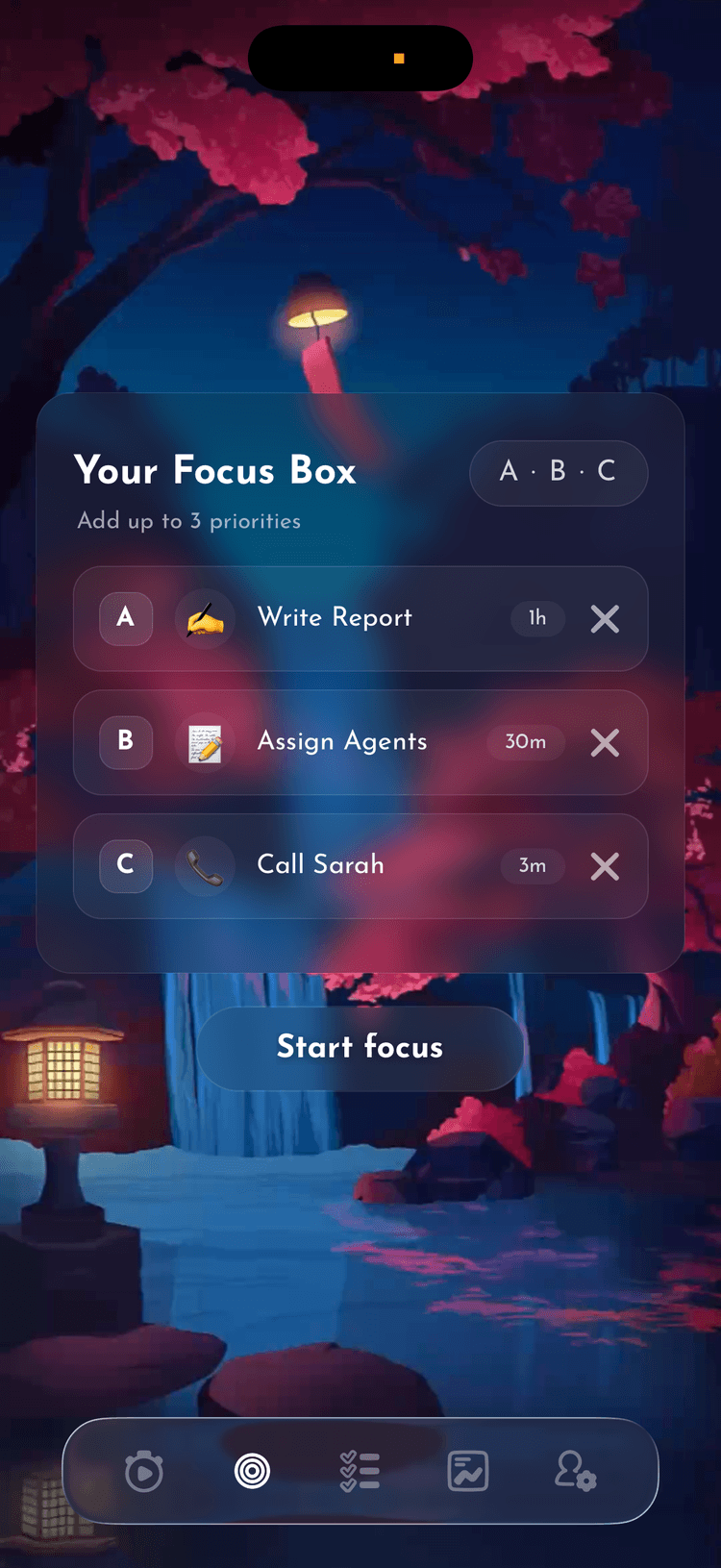
Temple Night
Serene & Mystical
Temple Day
Peaceful & Bright
Koi Pond
Tranquil & Flowing
Bamboo Grove
Fresh & Natural
More Than Just Backgrounds
Japanese gardens have been designed for centuries to inspire contemplation, peace, and presence. These carefully crafted landscapes embody principles of balance, simplicity, and natural harmony that translate perfectly into focus environments. When you surround yourself with the visual tranquility of a Japanese garden during work sessions, you tap into an aesthetic tradition designed specifically for mental clarity. The philosophy behind Japanese garden design—known as karesansui for dry landscapes or tsukiyama for hill gardens—centers on creating microcosms of nature that invite deep reflection and inner stillness. Bento's live Japanese garden themes bring this experience to your screen, creating an atmosphere where deep focus feels natural. Research in environmental psychology confirms that natural imagery reduces cortisol levels and enhances cognitive performance, making Japanese garden themes not just aesthetically pleasing but scientifically beneficial for productivity.
Visual Calm
Japanese garden aesthetics are designed to soothe the mind through centuries of refined design principles. Soft colors, natural elements, and balanced compositions reduce visual stress during long work sessions. The careful arrangement of stones, water, and plants creates a sense of order that translates into mental clarity. Unlike artificial or overly geometric designs, Japanese garden elements follow organic patterns that our brains find inherently restful and restorative.
Reduced Distraction
Unlike busy or stimulating backgrounds, Japanese garden themes provide visual interest without pulling your attention away from work. The design philosophy of ma (negative space) ensures that elements are spaced to allow the eye to rest. Subtle movement in water features or gently swaying bamboo engages peripheral vision just enough to prevent boredom while keeping central focus available for your tasks. This balance between visual richness and restraint is unique to Japanese aesthetic traditions.
Enhanced Mindfulness
The contemplative nature of Japanese garden design encourages present-moment awareness and intentional focus. Gardens in Japan were historically created as spaces for meditation and tea ceremonies—activities requiring complete presence. When you work within a Japanese garden theme, you inherit this contemplative atmosphere. The visual cues naturally slow racing thoughts and anchor attention in the current moment, making mindful work feel effortless rather than forced.
Seasonal Connection
Traditional Japanese gardens change with seasons, celebrating each phase of the natural year. Themed environments help you feel connected to natural rhythms even while working indoors. Spring brings cherry blossoms and fresh moss; summer offers lush greenery; autumn showcases brilliant maples; winter reveals the stark beauty of stone and bare branches. This seasonal rotation provides natural variety that keeps your focus environment fresh throughout the year while maintaining consistent aesthetic principles.
How It Works
Transform your focus sessions in three simple steps.
Choose Your Garden
Browse Bento's collection of Japanese garden themes. Each features different elements—koi ponds, stone gardens, bamboo groves, or cherry blossoms. Consider which aesthetic resonates most with your current mood and the type of work ahead.
Set Your Focus Session
Configure your timer and let the live theme create an immersive backdrop. Subtle animations bring the garden to life without distraction. Adjust session length based on task complexity—longer sessions for deep work, shorter for routine tasks.
Work in Tranquility
Let the serene environment support your concentration. The aesthetic ambiance helps maintain calm focus throughout your session. When distractions arise, let your eyes rest briefly on the garden scene to reset your attention.
Get the Most from Your Themes
Expert tips to maximize your focus environment.
Match Theme to Task
Use calmer stone garden themes for analytical work and livelier cherry blossom themes for creative tasks. The energy of your visual environment can subtly influence your mental state—choose accordingly.
Change with Seasons
Rotate themes seasonally to maintain freshness and connect your digital environment with the natural world. This practice honors traditional Japanese aesthetics while preventing visual fatigue from using the same theme continuously.
Pair with Ambient Sound
Combine visual themes with soft ambient sounds—flowing water, gentle rain, or wind through bamboo—for full immersion. The multi-sensory experience deepens the calming effect and creates a more complete environmental transformation.
Use Full Screen Mode
Maximize the atmospheric effect by using Bento in full screen during focus sessions. Let the garden fill your peripheral vision. This creates a more immersive experience and reduces the chance of other desktop elements catching your attention.
Create Theme Rituals
Associate specific themes with specific work types. This creates mental cues that help you enter focus mode faster. Over time, simply seeing your chosen theme will signal your brain that it is time for concentrated work.
Embrace Asymmetrical Balance
Japanese garden design favors asymmetrical balance over perfect symmetry. Apply this principle to your workspace arrangement—create visual interest through intentional imperfection rather than rigid organization.
Mistakes to Avoid
Learn from others' experiences and sidestep these common errors.
Choosing overly dynamic or bright Japanese themes for deep work
Select themes with subtle movement and muted colors for concentration-heavy tasks. Save more vibrant cherry blossom or autumn maple themes for creative work or lighter tasks where some stimulation is beneficial.
Cluttering your physical workspace while using minimalist Japanese themes
Extend the Japanese aesthetic to your physical environment. A cluttered desk surrounding a serene digital garden creates cognitive dissonance. Clear your workspace to match the intentional simplicity of your chosen theme.
Never changing themes and experiencing visual fatigue
Rotate themes regularly—daily, weekly, or seasonally depending on preference. Even within Japanese garden aesthetics, variety prevents habituation and maintains the themes psychological effectiveness over time.
Using Japanese themes in poor lighting conditions
Ensure proper screen brightness and ambient lighting. Japanese garden themes lose their calming effect when viewed on overly bright screens in dark rooms or washed out by direct sunlight. Match your lighting to your visual environment.
Expecting immediate focus without intentional transition
Build a brief transition ritual when starting your Japanese garden focus session. Take three deep breaths, consciously observe the theme for 30 seconds, then begin work. This primes your nervous system to receive the calming benefits.
Real-World Examples
See how others apply these principles in practice.
Morning Deep Work Session for Writing
A content writer begins each morning with a two-hour deep work block using a misty zen rock garden theme. The soft grays and greens of dawn light filtering through carefully placed stones create a contemplative atmosphere perfect for crafting thoughtful prose. The subtle movement of mist drifting across the scene provides enough visual interest to prevent restlessness while maintaining the calm needed for creative flow. This consistent environmental cue has become an essential part of their productive morning routine.
Afternoon Study Sessions for Complex Material
A graduate student studying dense academic texts uses a koi pond theme during afternoon study blocks. The gentle movement of fish through crystal water provides micro-breaks for the eyes without requiring leaving the study environment. The combination of stillness and subtle life in the scene mirrors the mental state needed for comprehending difficult material—alert yet calm, engaged yet not stressed. The theme has become associated with successful learning sessions.
Evening Creative Work Under Pressure
A designer working on deadline-driven projects chooses a twilight bamboo grove theme for evening sessions. The vertical lines of bamboo stalks create visual rhythm that somehow aids creative thinking, while the dusky purple sky signals that this is focused work time despite the late hour. The rustling bamboo animation provides natural movement that keeps energy levels appropriate for creative problem-solving without the anxiety that more stimulating environments might produce.
Weekend Long-Form Project Work
An entrepreneur dedicates weekend mornings to strategic planning using a cherry blossom theme that rotates through seasonal variations. Spring blossoms accompany planning for new initiatives; autumn leaves appear during reflection and review sessions. This seasonal theming creates natural variety across the year while maintaining consistent Japanese aesthetic principles. The practice has transformed weekend work from a chore into an anticipated ritual of intentional focus.
Common Questions
Everything you need to know about Bento themes.
Do animated themes distract from work?
Bento's live themes feature subtle, slow animations designed to be calming rather than distracting. Movement is peripheral and gentle—like real nature—creating atmosphere without demanding attention. Most users find they enhance rather than detract from focus. The key is that animation occurs at the pace of natural phenomena: slowly drifting clouds, gently rippling water, or gradually falling petals. This type of movement actually helps prevent the visual fatigue that static images can cause over long periods.
Can I use Japanese garden themes on multiple devices?
Yes, Bento syncs your theme preferences across devices. Your chosen Japanese garden theme will be consistent whether you are working on your phone, tablet, or computer. This consistency reinforces the psychological connection between theme and focus state, making device-switching seamless while maintaining your productive atmosphere.
Why do Japanese aesthetics help with focus?
Japanese design principles emphasize simplicity, balance, and negative space—concepts that reduce cognitive load. The aesthetic tradition values creating environments for contemplation, making it naturally suited for focus work. Additionally, the biophilic elements in Japanese gardens (water, stones, plants) trigger innate relaxation responses in humans. The combination of cultural design wisdom and biological nature-connection makes Japanese aesthetics uniquely effective for concentration.
How many Japanese garden themes does Bento offer?
Bento features a growing collection of Japanese-inspired themes including zen rock gardens, koi ponds, bamboo forests, cherry blossom scenes, and seasonal variations. New themes are added regularly based on user feedback and seasonal relevance. The variety ensures you can find themes matching any mood or work type while staying within the Japanese aesthetic tradition.
What is the difference between zen gardens and Japanese gardens?
Zen gardens (karesansui) are a specific type of Japanese garden featuring dry landscapes of raked gravel and carefully placed stones, originally created for meditation at Buddhist temples. Broader Japanese garden styles include pond gardens, tea gardens, and stroll gardens with more diverse elements. Bento offers both styles—austere zen rock gardens for maximum minimalism and richer Japanese landscape gardens for those preferring more natural complexity.
Can Japanese themes work for high-energy tasks?
While Japanese themes excel at calm focus, certain variations suit more energetic work. Bright spring cherry blossom themes or gardens with active water features provide more visual stimulation while maintaining Japanese aesthetic principles. For very high-energy brainstorming, you might occasionally prefer other theme categories, then return to Japanese themes for execution and refinement phases.
How do I choose between different Japanese garden themes?
Consider your task type, energy level, and current emotional state. Stone-dominant themes suit analytical work requiring precision. Water features aid creative flow. Cherry blossoms energize without overwhelming. Autumn themes support reflective deep work. Bamboo creates vertical rhythm helpful for sustained focus. Experiment during different work types to develop personal associations, then use those learned connections intentionally.
Experience Beautiful Focus
Download Bento and discover themes that make focus sessions something to look forward to.

Scan to download
Available on the App Store